
From recognizing the silent signs of a leak to understanding strict code requirements, here is your definitive guide to keeping your family safe and your home compliant.
In the Yukon, natural gas and propane are more than just utilities—they are lifelines. Whether you are running a high-efficiency furnace to fight a -40°C snap, or relying on a commercial range to keep your restaurant kitchen moving, your gas lines are the silent arteries of your building.
But unlike a leaky faucet, a gas issue isn’t an annoyance; it’s an emergency.
At Next Level Plumbing & Gas Fitting, we find that most homeowners don’t think about their gas lines until they smell rotten eggs or want to install a new BBQ box. This guide is designed to change that. We are pulling back the curtain on gas safety, code requirements, and the smart upgrades that can lower your heating bills and increase your property value.
1. The “Hidden” Network: Understanding Your Gas Lines
Most people see the yellow pipe sticking out of the ground and stop thinking there. But your home’s gas system is a complex network of pressure regulators, black iron or copper piping, and shut-off valves.
Natural Gas vs. Propane: What’s the Difference? In Whitehorse, we see both.
- Natural Gas: Delivered via underground utility lines. It is lighter than air (it rises if it leaks) and is generally cheaper for heating large spaces.
- Propane: Stored in tanks on your property. It is heavier than air (it sinks and pools on the floor if it leaks), which changes how we approach safety and detector placement.
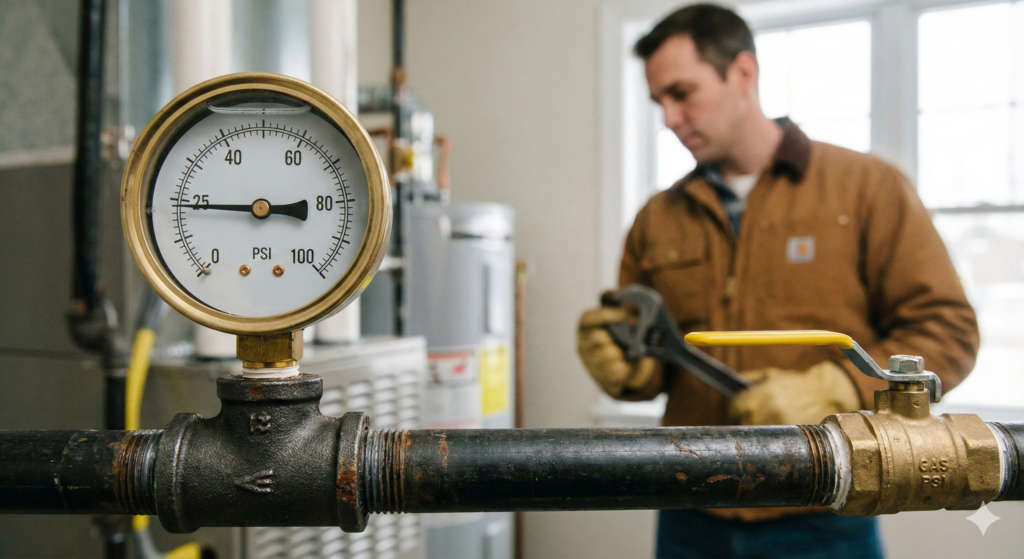
The “High Pressure” Reality Gas enters your home at a higher pressure than your appliances can handle. A critical part of our job as Gas Fitters is installing and calibrating regulators—devices that step down that pressure so your furnace doesn’t get “blown out.” If you hear a whistling sound near your meter or tank, that’s often a regulator letting you know it’s struggling.
2. Signs of a Gas Leak (And What to Do Immediately)
You likely know the smell—that “rotten egg” odor added to the gas so you can detect it (Mercaptan). But leaks can be subtle, and in a garage or mechanical room, the smell might get masked by other odors.
The Silent Signs:
- Dead Houseplants: If plants near a gas line suddenly die, it could be from oxygen displacement near the soil.
- Hissing Sounds: A small pinhole leak in a pipe behind a wall can sound like a quiet hiss.
- Bubbles in Water: If you have an underground line running through a wet area of your yard and see bubbling, call us immediately.
- Physical Symptoms: Unexplained headaches, dizziness, or nausea whenever you are in a specific room (like the kitchen or laundry room).
The “Next Level” Safety Protocol: If you suspect a leak:
- Stop: Don’t flip light switches or use your phone in the room (sparks trigger explosions).
- Leave: Get everyone outside immediately.
- Call: Call the utility company or 911 from a safe distance.
- Call Us: Once the immediate danger is cleared by the fire department, we come in to pressure test the lines, find the breach, and repair it.
3. Gas Appliance Upgrades: Why “DIY” is Illegal (and Dangerous)
We love the DIY spirit of the Yukon. You can paint your walls, fix your deck, and even swap a toilet. But Gas Fitting is a Red Seal Trade for a reason.
In the Yukon, it is illegal for a non-certified individual to alter gas lines. Insurance companies will instantly void your policy if they find unpermitted gas work caused a fire.
The Most Popular Upgrades We See:
- Gas Ranges: Chefs love them for the instant heat control. We size the line to ensure you get enough BTUs so the flame doesn’t “sag” when you turn on the oven.
- Garage Heaters: A game-changer for Yukon winters. We install vented tube heaters or unit heaters that keep your vehicles warm without filling the space with exhaust.
- BBQ Boxes: Tired of swapping propane tanks? We run a hard line to your deck so you have endless fuel for summer grilling.
- On-Demand Water Heaters: These high-efficiency units require larger gas lines than standard tanks. Many homeowners buy one online, only to realize their existing ½” pipe can’t power it.
4. The “Code” Check: Is Your Home Compliant?
Building codes evolve. If your home was built in the 80s or 90s, your gas fitting might be “grandfathered” in, but that doesn’t mean it’s safe by modern standards.
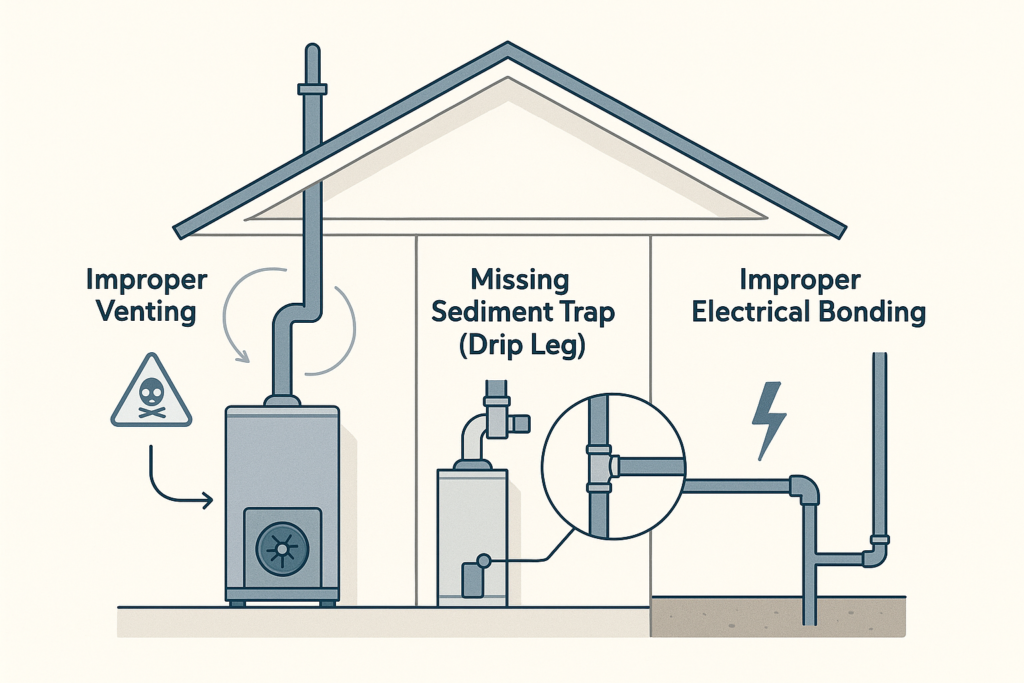
Common Code Violations We Fix:
- Improper Venting: Gas appliances need oxygen to burn. If you renovate and seal up your house too tightly without adding fresh air intake, your furnace can start creating Carbon Monoxide (CO).
- Sediment Traps (Drip Legs): Every gas appliance needs a little “pocket” in the pipe to catch debris and moisture before it enters the burner. If your water heater doesn’t have one, the burner will clog prematurely.
- Bonding: Gas piping needs to be electrically bonded to ground. If lightning strikes near your home, unbonded gas lines can arc and cause a fire.
5. Carbon Monoxide: The Ghost in the Machine
You cannot talk about gas without talking about Carbon Monoxide (CO). It is odorless, colorless, and deadly.
The Source: CO happens when gas doesn’t burn completely (incomplete combustion). This usually happens because of a dirty burner, a blocked chimney (bird nests are common!), or a cracked heat exchanger in an old furnace.
The Defense:
- Detectors: You need one on every floor, specifically near sleeping areas. Replace them every 7-10 years.
- Annual Service: This is why we clean burners. A blue flame is good; a flickering yellow/orange flame (on a standard burner) often indicates bad combustion and CO production.
Conclusion: Peace of Mind is Priceless
Gas appliances are incredibly efficient and reliable—when they are installed correctly. Whether you are dreaming of a new gas fireplace for the living room or just want to ensure your 20-year-old piping isn’t leaking, professional gas fitting is an investment in safety.
At Next Level Plumbing & Gas Fitting, we treat every gas line as if it were running through our own home. We pressure test, we soap test, and we verify every connection.
Don’t Guess With Gas. If you are planning a renovation or smell something odd, give us a call. We’ll make sure your system is safe, efficient, and ready for the cold.