
Plumbing problems rarely start with a burst pipe or a flooded basement. In most homes, serious plumbing failures are preceded by subtle warning signs that are easy to overlook—or ignore. Catching these early can save homeowners thousands of dollars in repairs, prevent property damage, and reduce the stress of emergency calls.
Below are five common early warning signs that your home’s plumbing system may be heading toward failure, and when it’s time to call a licensed professional.
1. Persistent Drips and Slow Leaks
A dripping faucet or a small leak under the sink might not seem urgent, but even minor leaks are a red flag. Over time, constant moisture can damage cabinets, flooring, and drywall, and it can also indicate deteriorating seals, worn valves, or pipe corrosion.
What makes this especially concerning is that visible drips are often only part of the problem. Leaks inside walls or beneath floors can go unnoticed for months, leading to mold growth and structural damage. If a drip continues after tightening fittings or replacing a washer, it’s time to have the system properly inspected.
2. Sudden or Gradual Drops in Water Pressure
Changes in water pressure are one of the most common signs of plumbing trouble. A gradual loss of pressure can point to mineral buildup inside pipes, corrosion, or partially closed valves. Sudden pressure drops, on the other hand, may indicate a leak or pipe failure somewhere in the system.
Low pressure doesn’t just affect comfort—it puts extra strain on fixtures and appliances that rely on steady flow. If you’re noticing weak pressure throughout the house or inconsistent flow between fixtures, a professional assessment can help identify whether the issue is localized or system-wide.
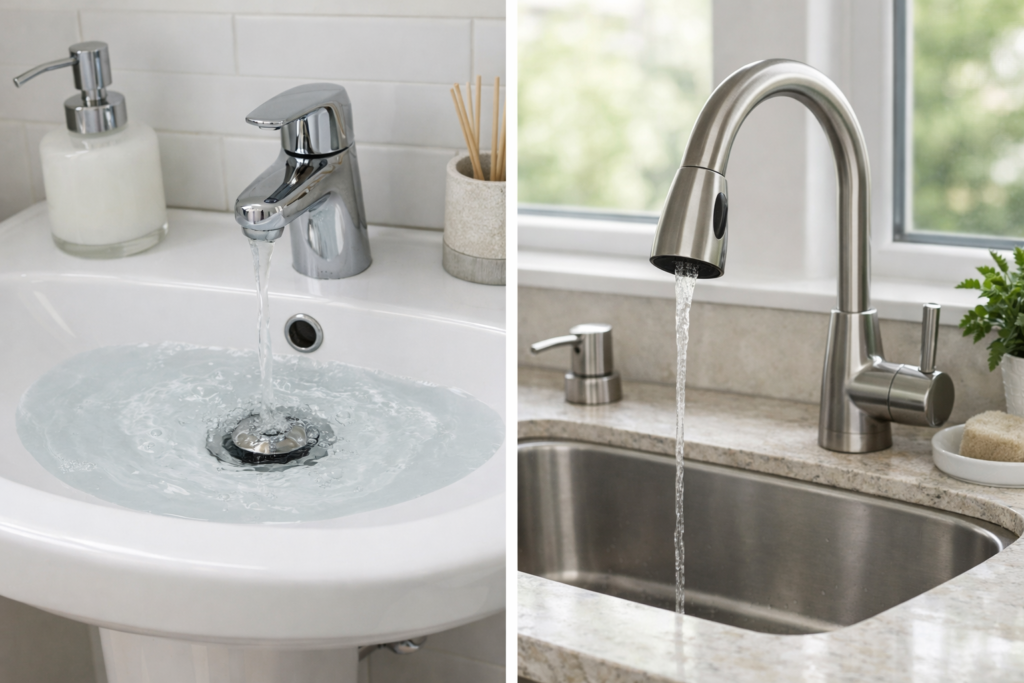
3. Slow or Frequently Clogged Drains
An occasional slow drain is normal. Repeated slow drains throughout the home are not. This often signals buildup in the main drain line or improper venting, both of which can lead to backups if left unresolved.
Chemical drain cleaners may offer a temporary fix, but they can damage pipes over time—especially in older homes. If multiple fixtures are draining slowly or clogs keep returning, it’s best to address the root cause before it escalates into a major blockage or sewage backup.
4. Unusual Noises in Pipes
Banging, rattling, whistling, or gurgling sounds coming from your plumbing system are more than just annoying—they’re warning signs. These noises can indicate trapped air, loose pipes, pressure issues, or failing components.
Ignoring these sounds can result in pipe movement, joint failure, or damage inside walls and ceilings. Plumbing systems should operate quietly. Any persistent noise is worth investigating before it turns into a costly repair.
5. Visible Corrosion or Water Stains
Discoloured pipes, flaking metal, rust spots, or water stains on walls and ceilings are clear indicators that something is wrong. Corrosion weakens pipes and increases the risk of leaks or sudden failure, especially in older systems.
Water stains often mean moisture is present where it shouldn’t be. Even if the source isn’t immediately obvious, stains should never be ignored. Early detection allows for targeted repairs instead of widespread water damage.
When to Call a Professional
If you notice one or more of these warning signs, it’s best not to wait. Plumbing systems are interconnected, and small issues can quickly affect other areas of the home. A licensed plumber can identify underlying problems, recommend preventative solutions, and ensure repairs are done safely and to code.
Addressing plumbing issues early protects your home, reduces long-term costs, and gives you peace of mind—especially in colder climates where pipe failures can escalate quickly.
If you’re experiencing any of these signs, having your plumbing system checked sooner rather than later can make all the difference.