
Most residential plumbing emergencies don’t come out of nowhere. Burst pipes, overflowing drains, and sudden water heater failures are usually the end result of smaller issues that were ignored, misunderstood, or temporarily patched. Understanding what actually causes these emergencies gives homeowners the chance to prevent damage, avoid stress, and reduce costly after-hours service calls.
Below are the most common causes of residential plumbing emergencies—and what you can do to avoid them.
1. Ignoring Small Leaks and Drips
One of the biggest contributors to plumbing emergencies is neglect. A slow drip under a sink or a minor leak at a pipe joint often feels harmless, but over time it weakens materials, causes corrosion, and leads to hidden water damage.
Leaks inside walls or ceilings can go unnoticed until they suddenly fail. Regularly checking visible plumbing, addressing leaks promptly, and not delaying repairs are simple steps that prevent small problems from turning into major failures.
2. Aging or Corroded Pipes
Older homes are especially vulnerable to plumbing emergencies due to aging infrastructure. Pipes made from galvanized steel, older copper, or early plastics degrade over time. Corrosion narrows the interior of pipes, reduces water flow, and increases pressure stress.
As pipes weaken, they become more susceptible to cracking or bursting—often without much warning. Having an older plumbing system inspected allows problem areas to be identified before a failure occurs, especially in colder climates where pipe stress is higher.
3. Improper Use of Drains and Toilets
Many plumbing emergencies start with what goes down the drain. Grease, food scraps, wipes, paper towels, hygiene products, and excessive toilet paper all contribute to blockages. Even products labelled “flushable” can cause serious issues in residential plumbing systems.
Repeated clogs often indicate buildup deeper in the system, not just a local blockage. Avoiding improper disposal and addressing recurring drainage issues early helps protect the main drain line and prevents backups that can affect the entire home.
4. Freezing Temperatures and Poor Pipe Protection
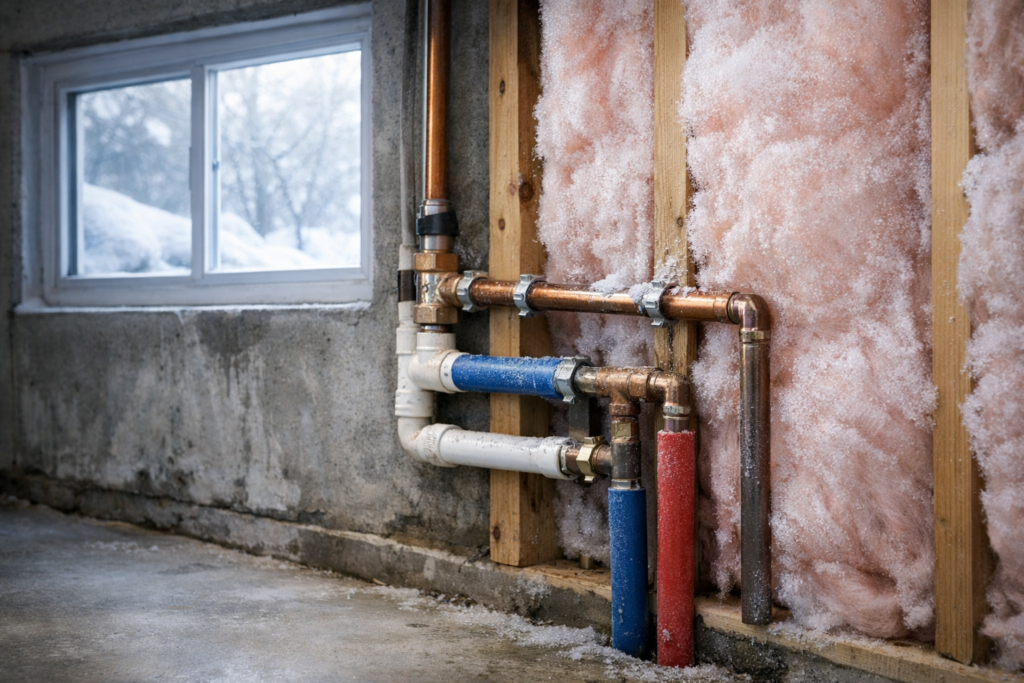
Cold weather is one of the leading causes of emergency plumbing calls. Pipes located in exterior walls, crawl spaces, garages, or poorly insulated areas are especially vulnerable to freezing. When water freezes, it expands, creating pressure that can crack or burst pipes.
Many homeowners only discover the problem once temperatures rise and water starts flowing again—often resulting in sudden flooding. Proper insulation, sealing drafts, and winterizing vulnerable plumbing lines significantly reduce the risk of freeze-related failures.
5. Water Pressure That’s Too High
While low water pressure is inconvenient, excessively high pressure is far more dangerous. High pressure puts constant stress on pipes, fittings, valves, and appliances. Over time, this stress leads to leaks, failed connections, and premature equipment breakdown.
Pressure issues are not always obvious without proper testing. A licensed plumber can check system pressure and install pressure-regulating solutions if needed, protecting the entire plumbing system from unnecessary strain.
6. Lack of Preventive Maintenance
Many residential plumbing emergencies stem from a simple lack of maintenance. Water heaters go unchecked, valves seize up, drains slowly build debris, and minor issues compound over time.
Routine inspections and basic maintenance catch problems early and extend the life of plumbing components. Preventive service is far less disruptive—and far less expensive—than emergency repairs.
How Homeowners Can Reduce Emergency Risk
Avoiding plumbing emergencies isn’t about constant worry—it’s about awareness and timely action. Paying attention to changes in performance, scheduling inspections when needed, and addressing small issues promptly all play a role in keeping a plumbing system reliable.
If your home is experiencing recurring clogs, pressure changes, unexplained leaks, or if your plumbing system is older, a professional assessment can help identify risks before they escalate.
Taking preventive steps today can save significant time, money, and frustration tomorrow—especially when it comes to protecting your home and avoiding emergency situations.