
In cold climates, a heating system isn’t just another household appliance—it’s essential infrastructure. Annual heating system maintenance is one of the most effective ways to protect comfort, control energy costs, and reduce the risk of mid-winter breakdowns when demand for service is highest.
Many heating failures don’t happen suddenly. They build quietly over time due to wear, dirt, airflow restrictions, and overlooked safety issues. Regular maintenance addresses these problems before they become emergencies.
What Annual Heating Maintenance Actually Includes
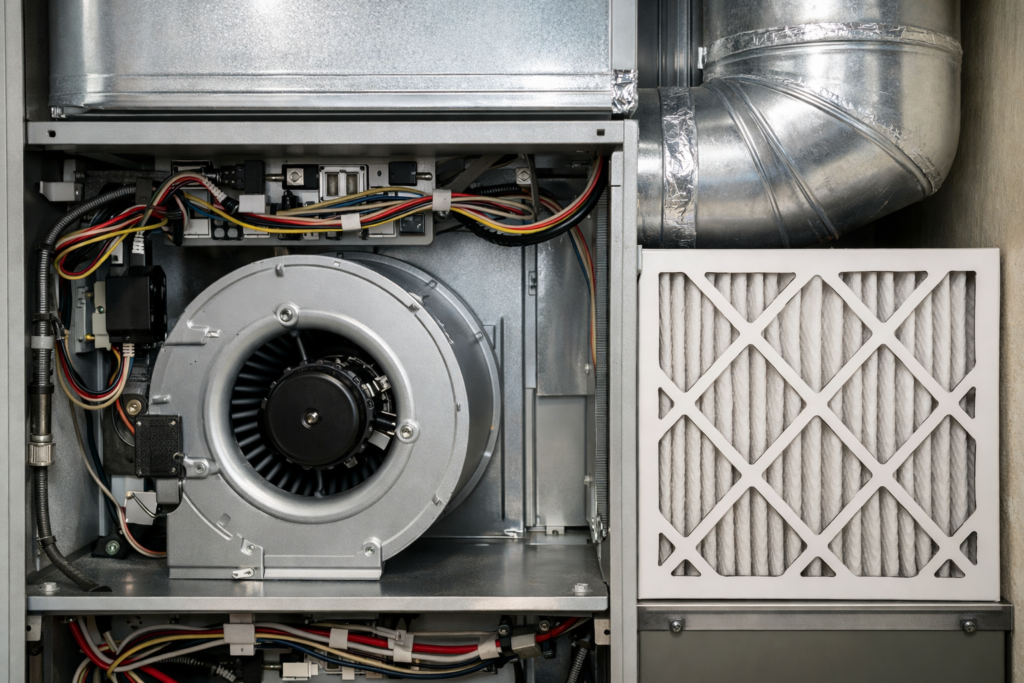
Professional heating maintenance is far more than a quick visual check. A proper service visit typically includes a full system evaluation to ensure safe and efficient operation.
Common maintenance tasks include:
- Inspecting and cleaning burners or heat exchangers
- Checking ignition systems and safety controls
- Testing thermostats and system response
- Inspecting blower motors and belts
- Replacing or inspecting air filters
- Checking airflow and duct connections
- Inspecting venting and combustion air
- Verifying gas pressure and electrical connections
Each of these steps plays a role in system performance and safety.
Improved Efficiency and Lower Energy Bills
As heating systems operate, dust buildup, worn components, and airflow restrictions gradually reduce efficiency. The system must work harder to deliver the same amount of heat, increasing energy consumption.
Annual maintenance helps:
- Restore proper airflow
- Improve heat transfer
- Reduce unnecessary system strain
The result is more consistent heating and lower utility costs throughout the winter season.
Reduced Risk of Breakdowns
Most emergency heating calls occur during extreme cold—exactly when systems are under the most stress. Preventive maintenance identifies failing components early, allowing for planned repairs rather than urgent replacements.
Replacing a worn part during routine service is far less disruptive—and far less expensive—than dealing with a full system failure in mid-winter.
Extended System Lifespan
Heating systems represent a significant investment. Without maintenance, components wear prematurely, and small issues accelerate overall system degradation.
Regular servicing:
- Reduces mechanical stress
- Prevents corrosion and overheating
- Extends the usable life of the system
Well-maintained systems often last years longer than neglected ones.
Safety and Combustion Checks
For gas and fuel-burning systems, safety is a critical part of maintenance. Issues such as cracked heat exchangers, blocked vents, or improper combustion air can create serious hazards.
Annual inspections help ensure:
- Exhaust gases are vented properly
- Carbon monoxide risks are minimized
- Safety controls function correctly
These checks protect occupants and provide peace of mind throughout the heating season.
Better Comfort and Reliability
A properly maintained heating system delivers more even temperatures, quieter operation, and faster response to thermostat settings. Small adjustments during maintenance—such as airflow balancing or thermostat calibration—can significantly improve comfort.
Homeowners often notice improved performance immediately after a professional service visit.
When Maintenance Should Be Scheduled
The best time for annual heating maintenance is before peak winter demand. Scheduling service in the fall allows issues to be addressed proactively and ensures the system is ready when temperatures drop.
For older systems or homes in extreme climates, annual maintenance isn’t optional—it’s essential.
Preventive Care Pays Off
Annual heating system maintenance isn’t about fixing what’s broken. It’s about keeping a reliable system running safely, efficiently, and predictably when you need it most.
By investing in regular maintenance, homeowners reduce emergency risks, lower operating costs, and protect one of the most important systems in their home.