
Protect your tenants, avoid liability, and save thousands in emergency repairs with this proactive plumbing maintenance guide.
In the Yukon, winter isn’t just a season—it’s a stress test for your building. For property managers and business owners in Whitehorse, the drop in temperature brings a spike in liability. A single burst pipe in a commercial building doesn’t just mean a wet floor; it means displaced tenants, halted operations, and insurance premiums that skyrocket.
We’ve seen it happen too many times: a heating system fails at 2:00 AM on a Saturday, and by Monday morning, the damage is catastrophic. The good news? Most of these disasters are entirely preventable with a proactive winterization strategy.
Here is the essential checklist Scott recommends for every commercial property before the deep freeze sets in.
1. The “Heat Trace” Audit
If there is one thing that separates Yukon plumbing from the rest of the world, it’s our reliance on heat trace (or heat tape). In commercial buildings, these lines often run through unheated parkades, crawlspaces, or loading docks.
- The Risk: Heat trace can burn out silently. You won’t know it has failed until the pipe freezes and bursts.
- The Fix: Don’t assume it’s working just because it’s plugged in. Have a professional test the continuity and ensure the thermostat sensors are actually triggering when the temperature drops.
2. Boiler and RTU Health Checks
Your boiler or Rooftop Unit (RTU) is the heart of your building. If it’s struggling in October, it will fail in January.
- Listen to the System: Are pumps making grinding noises? Are there pressure fluctuations?
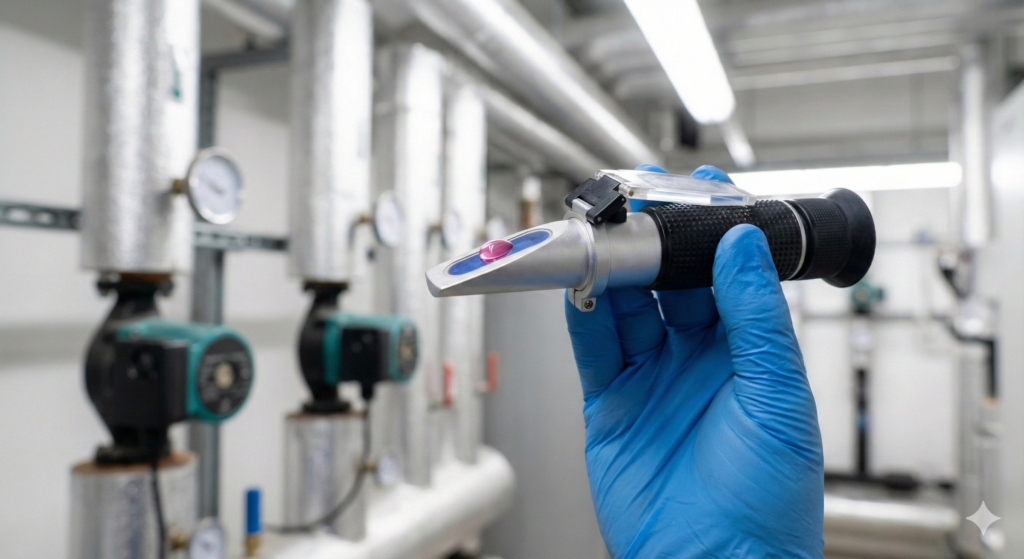
- Glycol Levels: For hydronic heating systems, checking glycol concentration is non-negotiable. If your glycol mix is too weak, the fluid in your pipes can turn into slush, destroying pumps and cracking pipes from the inside out.
3. Isolate and Drain Outdoor Water Sources
It sounds simple, but this is the most common cause of commercial floods. Hose bibs and outdoor spigots used for landscaping or cleaning trucks need to be isolated from the inside.
- The Process: Shut off the internal isolation valve, open the external spigot to drain the remaining water, and leave it open. If your commercial building has “frost-free” hose bibs, remember that they are only frost-free if the hose is removed!
4. Map Your Emergency Shut-Offs
In a commercial emergency, speed is everything. Does your night shift staff know where the main water shut-off is? Do your tenants know how to isolate their specific unit?
- The Action Plan: Tag your main valves clearly. If a pipe bursts, every second the water runs is thousands of dollars in restoration costs. If you aren’t sure where your zones are, have us come in to tag and map them for you.
5. Inspect the “Envelope”
Plumbing doesn’t freeze because it’s cold outside; it freezes because cold air touches the pipe. Walk your mechanical rooms and perimeter walls. Look for gaps in insulation, drafty vents near water lines, or doors that don’t seal properly. A $10 tube of caulking or a new weather strip can save you a $10,000 plumbing bill.
Don’t Wait for the Alarm to Ring
Commercial plumbing maintenance is about peace of mind. You have a business to run—let us handle the mechanicals.
If you haven’t completed your winterization inspection yet, call Next Level Plumbing & Gas Fitting. We will audit your mechanical room, check your glycol, and ensure your building is ready to handle whatever the Yukon throws at it.
Schedule a Commercial Site Visit Today With Next Level Plumbing & Gas Fitting