
Commercial plumbing systems are designed to handle higher demand, but that doesn’t make them immune to failure. In fact, the complexity and constant use of commercial plumbing mean that when problems occur, the impact is often immediate and disruptive.
Understanding the most common commercial plumbing issues—and how they affect operations—helps business owners and facility managers reduce downtime, control costs, and plan maintenance more effectively.
1. Drainage and Sewer Line Problems
Drain issues are one of the leading causes of commercial plumbing disruptions. High usage, improper disposal, and grease buildup place constant strain on drain lines.
Common causes include:
- Grease and food waste buildup
- Foreign objects flushed into the system
- Tree root intrusion
- Collapsed or aging sewer lines
Slow drainage, recurring backups, or unpleasant odours are early indicators that shouldn’t be ignored. Left unresolved, drain issues can lead to sewage backups that force businesses to close temporarily or fail inspections.
2. Grease Trap Failures
For restaurants, kitchens, and food-service businesses, grease traps are critical. When not properly maintained, they can clog, overflow, or emit strong odours—creating both operational and compliance issues.
Grease trap problems often result from:
- Infrequent cleaning
- Undersized systems
- Improper disposal practices
A failing grease trap can quickly shut down food operations and attract regulatory attention. Routine servicing is essential to keep kitchens operational and compliant.
3. Backflow Prevention Issues
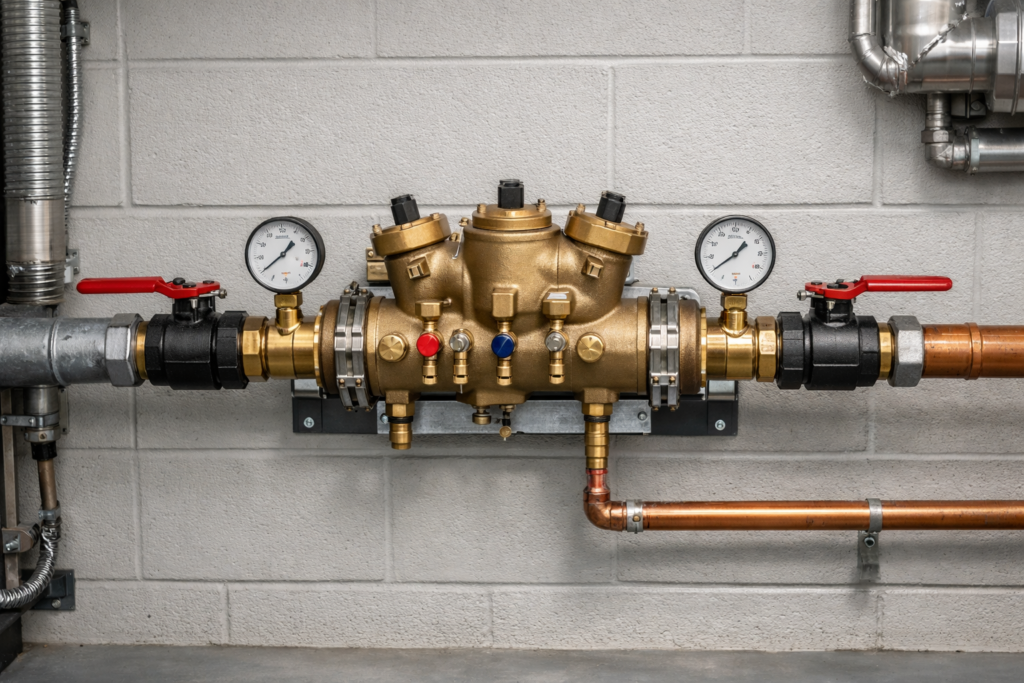
Backflow prevention devices protect potable water supplies from contamination. In commercial buildings, these systems are not optional—they are required for safety and code compliance.
Common issues include:
- Failed backflow tests
- Faulty or aging devices
- Improper installation
If a backflow preventer fails inspection, businesses may face immediate corrective requirements. Regular testing and maintenance ensure systems remain compliant and avoid service interruptions.
4. Washroom Fixture Failures
Commercial washrooms experience constant use, making fixtures more prone to wear. Running toilets, leaking flush valves, broken sinks, and faulty handwashing stations are more than maintenance issues—they directly affect customer experience and staff productivity.
Fixture failures can:
- Waste large volumes of water
- Increase utility costs
- Create sanitation concerns
- Trigger health inspection issues
Addressing minor fixture problems early prevents widespread disruptions and preserves facility standards.
5. Water Pressure and Supply Problems
Inconsistent or inadequate water pressure can disrupt daily operations, especially in buildings with multiple floors or high-demand usage. Pressure problems often stem from valve issues, pipe corrosion, leaks, or improperly balanced systems.
Low pressure affects:
- Washroom functionality
- Kitchen operations
- Equipment performance
- Fire suppression systems
Pressure testing and system balancing help ensure consistent performance throughout the building.
6. Water Heater and Mechanical Room Failures
Commercial water heaters and mechanical rooms are the backbone of many operations. Failures here can impact multiple areas at once, including washrooms, kitchens, and heating systems.
Common issues include:
- Sediment buildup
- Failing valves or controls
- Inadequate capacity
- Deferred maintenance
Because these systems serve multiple fixtures, failures often result in immediate operational disruption.
7. Aging Infrastructure in Commercial Buildings
Many commercial properties operate with plumbing systems that are decades old. Aging pipes, outdated materials, and previous repairs increase the likelihood of leaks, pressure issues, and sudden failures.
Older infrastructure often:
- Requires more frequent maintenance
- Fails unpredictably
- Costs more to repair in emergencies
Planned upgrades and regular inspections reduce risk and extend system lifespan.
Why These Issues Matter for Business Operations
Commercial plumbing problems don’t just affect water flow—they affect business continuity. Disruptions can result in:
- Temporary closures
- Lost revenue
- Health and safety violations
- Customer dissatisfaction
- Increased emergency repair costs
Understanding these common issues allows business owners and facility managers to shift from reactive repairs to proactive system management.
The Value of a Proactive Commercial Plumbing Strategy
A proactive approach focuses on identifying risks before they escalate. Regular inspections, targeted maintenance, and timely upgrades help prevent unexpected failures and keep operations running smoothly.
For commercial properties, plumbing reliability isn’t optional—it’s essential infrastructure that supports daily operations.