
When winter temperatures drop, your heating system isn’t just about comfort—it’s essential infrastructure. In cold climates, even minor heating issues can quickly turn into serious problems, especially if they’re ignored too long. If your furnace or heating system is struggling to keep up, it’s usually a sign that something isn’t working as it should.
Here are the most common heating problems faced in cold climates, what causes them, and when it’s time to call a professional.
1. Uneven Heating Throughout the Home
One of the earliest signs of heating trouble is uneven temperatures. Some rooms may feel warm while others remain cold, even when the system is running constantly.
Common causes include:
- Poor airflow or blocked vents
- Ductwork issues or leaks
- Improper system sizing
- Failing blower components
Uneven heating often indicates inefficiency and added strain on the system. Left unresolved, it can shorten equipment lifespan and increase energy costs.
2. Furnace Running Constantly
In cold climates, furnaces will run more frequently—but they should still cycle on and off. A system that runs nonstop may be struggling to reach the set temperature.
This can be caused by:
- Heat loss due to insulation issues
- Dirty filters restricting airflow
- Failing thermostats
- Aging or undersized equipment
Constant operation not only increases utility bills but also accelerates wear on critical components.
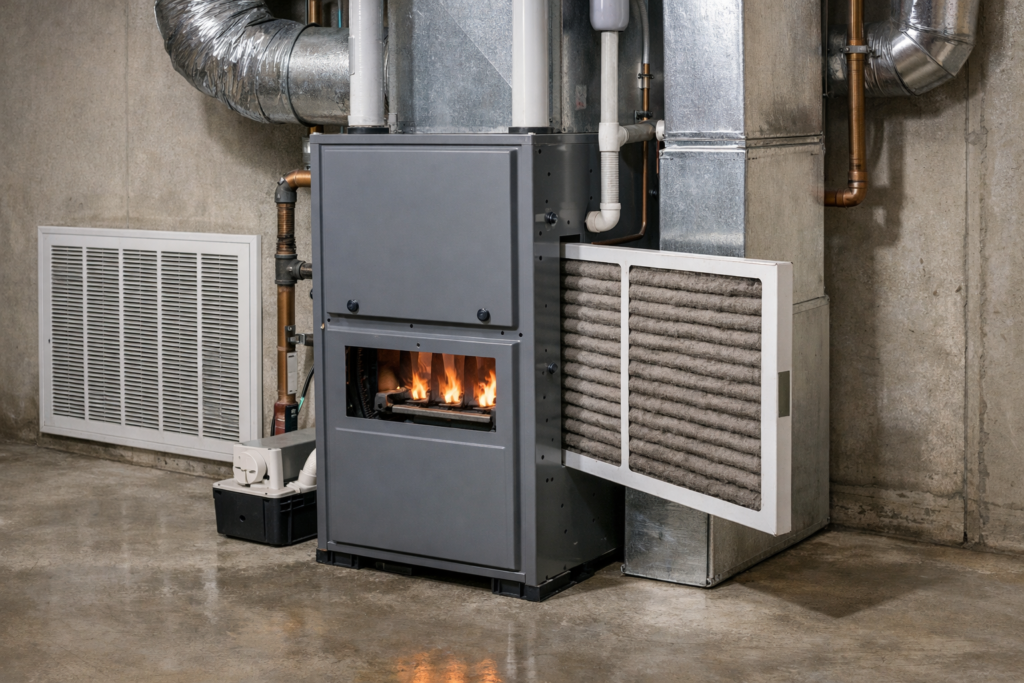
3. Short Cycling
Short cycling occurs when a furnace turns on and off repeatedly in short bursts. This prevents the system from reaching optimal operating temperature and can lead to uneven heating and higher energy consumption.
Possible causes include:
- Oversized furnaces
- Faulty sensors or controls
- Airflow restrictions
- Venting or combustion air issues
Short cycling should always be addressed promptly, as it places excessive stress on the system.
4. Rising Energy Bills Without Increased Use
If your heating bills are climbing but your usage habits haven’t changed, your system may be losing efficiency. Aging components, dirty burners, worn heat exchangers, or airflow problems force the system to work harder to produce the same amount of heat.
Efficiency loss is often gradual, making it easy to overlook until costs become noticeable.
5. Cold Air or Weak Airflow From Vents
A heating system should deliver steady, warm airflow. Cold air or weak output can signal:
- Burner or ignition issues
- Blower motor problems
- Duct leaks
- Thermostat malfunctions
In cold climates, reduced airflow can quickly make living spaces uncomfortable and unsafe.
6. Unusual Noises or Smells
Heating systems should operate relatively quietly. Banging, rattling, whistling, or persistent odours may indicate mechanical wear, loose components, or combustion issues.
Any burning smells, gas odours, or persistent unusual noises should be checked immediately to ensure safe operation.
7. System Age and Deferred Maintenance
Many heating problems stem from systems that have simply reached the end of their effective lifespan. Furnaces that are over 15–20 years old often struggle to perform efficiently in extreme cold.
Skipping routine maintenance increases the likelihood of breakdowns during peak winter demand—when service calls are hardest to schedule.
When to Call a Professional
If your furnace isn’t keeping up, waiting rarely improves the situation. Early diagnosis allows for repairs, adjustments, or maintenance before a minor issue becomes a mid-winter emergency.
A licensed professional can:
- Inspect system performance
- Identify airflow or efficiency issues
- Ensure safe combustion and venting
- Recommend repairs or upgrades if needed
Reliable Heat Matters in Cold Climates
In regions where winter conditions are harsh, heating systems must operate at peak performance. Addressing problems early protects comfort, safety, and long-term system reliability.
If your furnace is struggling to keep up, having it inspected sooner rather than later can help ensure your home stays warm and efficient when it matters most.