
When a gas appliance is installed, homeowners and business owners often hear the phrase “installed to code.” While it sounds reassuring, many people don’t fully understand what code compliance actually involves—or why it matters so much.
Code-compliant gas appliance installation is about far more than making an appliance work. It’s about safety, performance, legal responsibility, and long-term reliability. Here’s what “code-compliant” really means and why it should never be treated as optional.
Code Compliance Is About Safety First
Gas codes exist to protect people and property. They are built around preventing:
- Gas leaks
- Fire and explosion hazards
- Carbon monoxide exposure
- Inadequate combustion air
- Venting failures
A code-compliant installation ensures the appliance operates safely under normal conditions and during abnormal ones, such as pressure fluctuations or cold weather operation.
Proper Appliance Sizing Matters
Installing the right appliance isn’t just about brand or efficiency—it’s about capacity. Gas appliances must be correctly sized for:
- The space they serve
- The gas supply available
- The ventilation and venting system
An oversized appliance can short-cycle and wear prematurely. An undersized appliance may struggle to meet demand, especially in cold climates. Code compliance requires that sizing calculations are done correctly before installation.
Gas Supply and Pipe Sizing Requirements
Every gas appliance draws a specific amount of fuel. Gas piping must be sized to handle the total load of all connected appliances without pressure loss.
Code-compliant installations ensure:
- Correct pipe diameter
- Approved materials
- Proper routing and support
- Pressure testing after installation
Improper pipe sizing can cause poor appliance performance, ignition problems, or unsafe operating conditions.
Venting and Exhaust Clearances
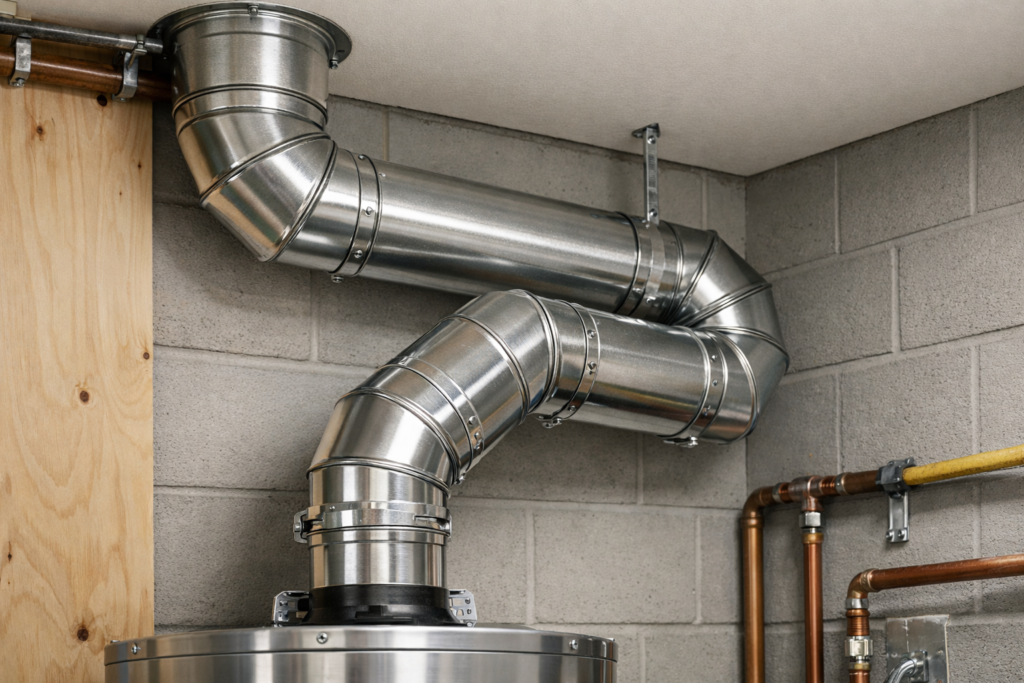
One of the most critical aspects of code compliance is proper venting. Gas appliances produce combustion gases that must be safely exhausted outdoors.
Code-compliant venting includes:
- Approved vent materials
- Correct vent sizing
- Proper slope and termination
- Required clearances from windows, doors, and intakes
Incorrect venting is a leading cause of carbon monoxide issues and inspection failures.
Combustion Air Requirements
Gas appliances require adequate air to burn fuel safely. In tightly sealed homes or commercial buildings, insufficient combustion air can cause appliances to malfunction or backdraft exhaust gases into occupied spaces.
Code compliance ensures:
- Proper combustion air openings
- Correct room sizing
- Safe appliance operation
This is especially important in mechanical rooms, basements, and commercial installations.
Shutoff Valves, Accessibility, and Labeling
Codes require accessible shutoff valves near appliances so gas flow can be stopped quickly if needed. Valves must be:
- Properly located
- Clearly accessible
- Installed using approved methods
These requirements allow safe servicing and emergency response when necessary.
Inspections, Permits, and Documentation
Most gas appliance installations require permits and inspections. Code-compliant work includes:
- Obtaining required permits
- Passing inspections
- Providing documentation
This protects property owners by ensuring work was reviewed and approved by the proper authority.
Insurance and Liability Protection
Insurance companies often require proof that gas appliances were installed to code by a licensed professional. If an incident occurs and the installation was not compliant, coverage may be denied.
Code-compliant installation protects:
- Property owners
- Business operators
- Tenants and occupants
It also reduces legal and financial risk.
Why Code Compliance Should Never Be Compromised
A gas appliance that “works” is not the same as one that is installed correctly. Code compliance ensures safety, efficiency, longevity, and legal protection.
Whether installing a furnace, water heater, fireplace, or commercial appliance, proper gas fitting is not an area for shortcuts. A licensed gas fitter ensures every detail—from sizing to venting to final inspection—is handled correctly.
That level of care isn’t just about meeting code. It’s about protecting people and property for the long term.